Eliminating and preventing damage to goods in transit. Once goods leave the company and enter the distribution cycle, the only thing protecting them is their packaging. Damage to goods in transit is a threat that can cause major costs for a company. There are several methods of preventing cargo damage in transit, the most important of which is optimising the packaging.
What Are the Most Common Types of Transport Damage?
During distribution, goods are exposed to a number of hazards:
First, sudden movements or strong impacts often occur, in addition to scratches and drops during handling. Vibrations, acceleration and deceleration, as well as repeated knocks or impacts, can endanger the load.
In addition, the climate can cause damage in transit, as the cargo may be exposed to moisture, cold or extreme heat, sea spray (in the case of sea transport) or dust and sand.
Goods are also at risk from biological factors such as rodents, insect pests, mould and mildew. Liquid or product spills and fire can lead to cargo damage and high costs for the company.
Hard braking, sharp turns, vibrations and crushed loads also lead to damage during road transport. When it comes to shipping by sea, cargo can be compromised by sudden side tilts, excessive humidity or impacts during loading. Rail transport can cause sudden movements due to hard braking or when wagons are coupled, which can lead to cargo damage in transit.
How to Prevent This Damage
Taking planning, safety and control measures in the distribution process can significantly reduce transport damage.
In particular, it is important to find the right packaging for the type of product and the distribution cycle to prevent cargo loss and shrinkage.
Today, the packaging industry offers many solutions:
- You can choose packaging that can withstand the forces the cargo is exposed to in transit (vibration, drops, changes in temperature or pressure)
- There are also packages that are easy to handle, which prevents drops and other problems in transit.
To make sure a parcel arrives safely at its destination, there are also packages that allow precise identification and system monitoring.
For successful cargo transport that prevents transport damage, monitoring and planning of the distribution cycle will be of paramount importance.
The success of these processes will depend on the joint efforts of experts who know, among other things, which product is to be transported, the distribution route chosen and the mode of transport.
Read also:
- How to Find the Best Packaging Solutions for Your Business
- Recommendations for Protecting Cargo in Transit
- Protective Transport Packaging for Fragile and Non-Standard Cargo
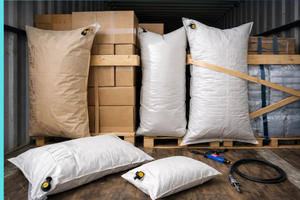
Related products: dunnage air bags.