In 2026, Black Friday falls on 27 November, and together with Cyber Monday (30 November) it is the busiest week of the year for an online store. Order volumes can multiply within a few days, and packing is often the bottleneck: the tape runs out, there is no void fill, packers queue at a single dispenser, and some parcels reach customers crushed or opened. This checklist helps you prepare your warehouse in advance: calculate material stock, speed up packing stations and protect parcels against damage and tampering.
The checklist is for stores shipping anywhere from a few dozen to several thousand orders a day. The figures are illustrative: plug in your own sales data and box sizes.
4 weeks out: forecast orders and stock
Everything starts with a forecast. Take your order count for a normal week and for last year's Black Friday, if you had one. If you have no data, build in a buffer based on planned discounts and ad budget. Then convert the forecast into materials:
- Consumption per order. How many metres of tape and void fill, and which boxes, a typical parcel needs. Measure it on 20–30 real orders.
- Orders in the peak week. Your forecast plus a buffer for returns and re-shipments.
- Lead time. Suppliers and carriers are busy in November too, so order materials to arrive at least a week before the sale starts.
We explained how to calculate the packaging cost of one order in "How to calculate the packaging cost of an order". The same figures become the basis for your purchasing.
Material stock checklist
Tape
Count how many strips of tape go on one box and how long they are. A typical H-seal on a medium box uses several tens of centimetres of tape. Multiply by the number of orders and add a buffer. For heavy boxes and high-value goods, consider water-activated gummed kraft tape: it bonds into the board and holds the seam more reliably. To choose tape width and type by box weight, read "Reinforced kraft tape: how to choose it by box weight".
Honeycomb paper
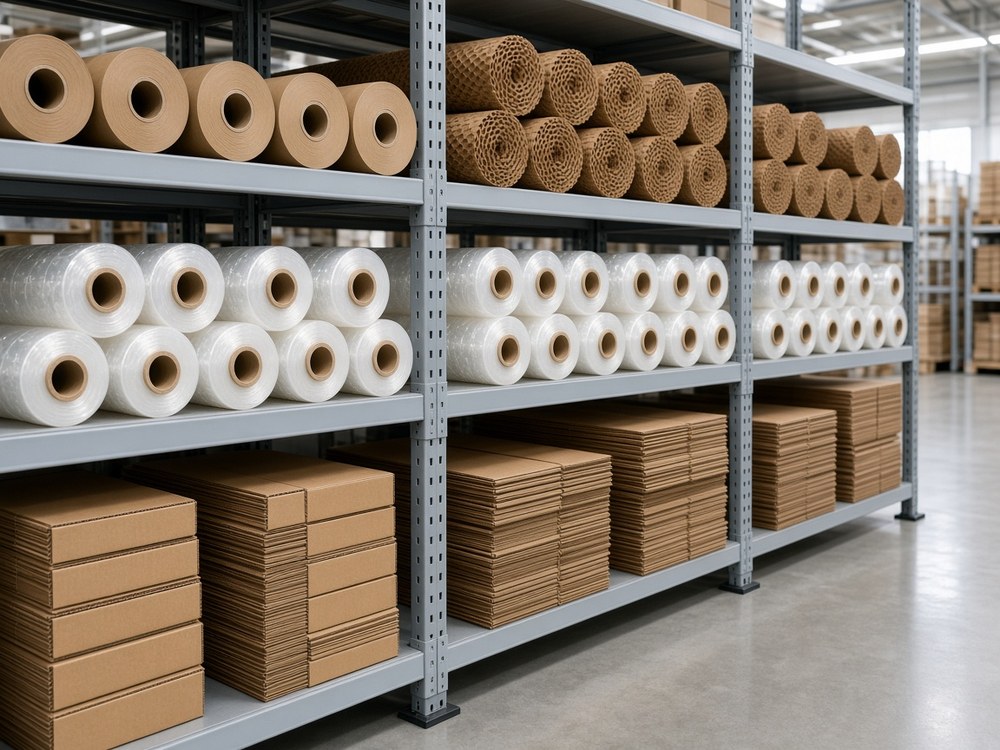
Honeycomb kraft paper replaces bubble wrap for wrapping and takes little warehouse space because it comes in compact rolls. Measure how many metres a typical order uses and convert it into rolls. We walk through the method in "How much honeycomb paper you need per order", and all void-fill options are in the box filler section.
AirWave air cushions
If you use an air cushion machine, plan film stock in metres: consumption per order times number of orders. Make sure the film fits your machine model. Machines and film are in the AirWave air cushion packaging section. If you are still deciding whether to buy a machine before the season, read "AirWave air cushion machine: when does it pay off?".
Boxes
Check that your box sizes match your best-selling products. Empty space in a box means more void fill and higher shipping costs. For sizing, read "Corrugated boxes for e-commerce: how to calculate the size".
2–3 weeks out: packing station speed
On peak days every extra second per order adds up to hours of work. Walk through your packing stations and check:
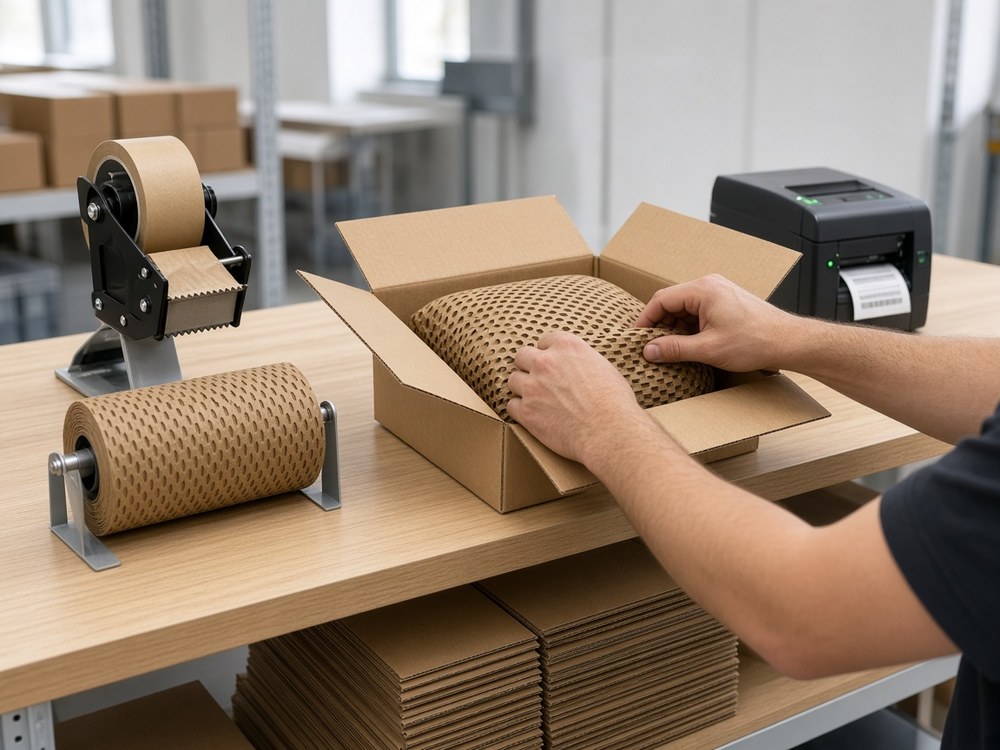
- A dispenser on every bench. A hand dispenser cuts tape one-handed and keeps it from sticking to itself. An electric or automatic gummed tape dispenser measures the length and wets the tape for you. See the tape dispenser section.
- Everything within reach. Popular box sizes, void fill, tape, labels and the printer should be within arm's length. Packers should not walk to fetch materials.
- Continuous void fill. A honeycomb paper roll on a holder or an air cushion machine next to the bench saves time compared with cutting wrap by hand.
- Standard packing recipes. For your 5–10 best sellers, define the box, filler and sealing method in advance. Print these recipes and hang them above the bench.
- A spare station. Prepare an extra bench and a set of materials for temporary staff.
Do a test run: time how many minutes it takes to pack 20 typical orders. This shows how many people and benches you need on the peak day.
1 week out: protection against damage and tampering
During sales, carriers handle more parcels and spend less time on each. Product protection matters more than usual.
Protection against damage
- The product must not move inside the box. Shake the sealed box: if anything shifts, add more fill.
- Wrap fragile items individually and keep them away from the box walls. See "How to pack fragile items: step by step".
- Seal heavy boxes with stronger tape along every seam.
Protection against tampering
Expensive goods, electronics and cosmetics are more often stolen in transit. Anti-theft tape leaves a visible mark if someone tries to peel it off, and gummed kraft tape cannot be removed without tearing the board. Both you and the customer will see at once if a parcel was opened. More methods are in "How to protect a parcel from opening and substitution".
Sale week: daily checks
- Every morning, check stock of tape, void fill, film and boxes. Set a minimum level that triggers a reorder.
- Keep spare knives, dispenser blades and a spare roll on every bench.
- Track complaints about damaged parcels and quickly change the packing recipe for the problem product.
- Schedule carrier pickups for peak volumes.
After Black Friday
Review the results: how much material you actually used, how many returns were caused by damage, and where packers lost time. You will need this data before the Christmas season, which starts right after Cyber Monday.
Frequently asked questions
When should I order packaging materials for Black Friday?
Ideally 3–4 weeks before the sale, so materials are in stock at least a week before it starts. Lead times can get longer in November.
How much tape do I need for the peak week?
Measure tape use per typical box, multiply by forecast orders and add a buffer for re-shipments. Exact figures depend on box sizes and sealing method.
Which is faster: honeycomb paper or air cushions?
Both are faster than cutting wrap by hand. Air cushions suit high volumes and large voids; honeycomb paper works well for wrapping products.
How do I protect parcels from tampering during sales?
Use anti-theft or gummed kraft tape, seal every seam and do not mark the box as containing valuable goods.
Conclusion
Black Friday preparation starts a month ahead: forecast orders, calculate stock of tape, void fill and boxes, set up packing stations and protect your parcels. If you need help choosing materials or equipment, contact the Viskom team. They will suggest what fits your warehouse.