A painting, mirror or glazed picture frame is one of the riskiest things you can put in the post. Glass cannot take a point impact, frame corners are the first thing to hit the sorting-hub floor, and a canvas can be pushed in even through thick cardboard. The good news is that most damage is predictable, so the right packing removes it. Below is the step-by-step method used by home-decor e-commerce warehouses, artists and galleries, with an explanation of why each layer is there.
The guide works for stretched canvases, posters and photos in glazed frames, wall and table mirrors, and loose glass or acrylic in a frame. For very large or valuable works (over 1 m on the long side, or of museum value) the logic stays the same, but a wooden crate is a better choice than a carton.
Why paintings and mirrors break in transit
To protect an item properly you need to know what you are protecting it from. There are four main risks:
- Corner impact. A parcel is dropped or stood on its edge and the whole force lands on one corner of the frame. That is where glass usually cracks and mitre joints open.
- Pressure on the face. A flat box ends up under other parcels. Without a rigid layer over the glass or canvas, the load goes straight into the item.
- Movement inside the box. Any gap between the frame and the walls lets the item shift and knock against the carton with every jolt.
- Puncture. Trolley edges, corners of other boxes and conveyor parts can pierce a thin wall and damage the canvas.
Hence the principle: secure the glass, protect the corners, wrap in a cushioning layer, immobilise in a strong box and label it correctly. If you already ship tableware or ceramics, the basics will be familiar from our guide on how to pack fragile items; framed items need a few extra steps.
What to prepare before packing
Lay everything out first so you never walk away from the bench with unprotected glass:
- masking (paper) tape or a protective film for the glass;
- frame corner protectors, ready-made or folded from corrugated board;
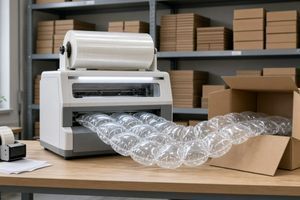
- wrapping material: Honeycomb kraft paper, Bubble Paper or bubble wrap;
- two sheets of rigid corrugated board cut to the frame size;
- a corrugated box with 4–6 cm of clearance on every side;
- void fill: AirWave air cushions or crumpled kraft paper;
- tape to seal the box and a “Fragile – glass” marking.
Work on a clean, flat surface: a small crumb under the glass is enough to crack it when you press down. Cover the bench with a soft material or board.
Step 1. Secure the glass
If the frame is glazed, apply masking tape across the glass in an X along the diagonals, or in a grid at 10–15 cm intervals. Tape will not stop the glass breaking on impact, but it holds the shards together if it does crack, so they do not slice the artwork underneath or cut through the packaging. Use low-tack paper masking tape: ordinary packing tape leaves residue that is hard to clean off. On bevelled mirrors and expensive anti-reflective glass, lay down a protective film or a sheet of paper first and tape over that.
If the painting has no glass (canvas on a stretcher), cover the front with a sheet of smooth, unprinted paper. Textured or bubble materials pressed against fresh varnish or oil paint can leave an imprint.
Step 2. Protect the frame corners
Corners are the weakest point. Fit a cardboard corner protector on each one; you can fold it from a square of corrugated board into a triangular pocket. It should sit snugly without being forced, and should not fall off. Secure it with a strip of paper tape to the protector itself, never to the frame or canvas. For heavy moulded frames, use two layers of board. On impact, the protector crushes first and absorbs energy that would otherwise reach the glass.
Step 3. Wrap the item in a cushioning layer
Now wrap the whole piece so there is at least 3–5 cm of cushioning on every side. Two options are popular:
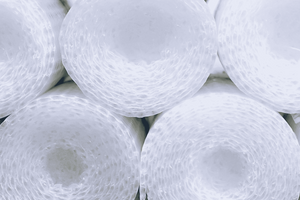
- Honeycomb kraft paper. When stretched, it forms three-dimensional cells that absorb shocks and grip the frame. Two or three turns are enough for medium paintings and mirrors; larger pieces need more. We worked out how much paper one shipment takes in how much honeycomb paper you need per order.
- Bubble wrap or Bubble Paper. Place the bubbles facing inwards towards the item, where they cushion best. Keep smooth paper between the bubbles and the face of a canvas.
For a comparison of bubble wrap and other cushioning, see bubble wrap vs polystyrene foam. If your shop wants plastic-free packaging, honeycomb paper is the easier choice because it is recycled together with the box.
Step 4. Add a rigid “sandwich”
Place the wrapped item between two sheets of rigid corrugated board, 2–3 cm larger than the frame on each side, and tape the sandwich around the edges. This layer spreads point loads over the whole surface: if something heavy is stacked on the box, or another parcel’s corner hits it, the board takes the blow instead of the glass. For stretched canvases the rigid sheet matters most, because it prevents punctures and dents.
Step 5. Choose the box and fill the voids
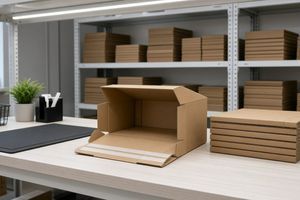
Use a corrugated box that is 4–6 cm larger than the sandwich on every side. Less clearance leaves no room for cushioning; more needs too much void fill and pushes up the volumetric weight. Choose double-wall (five-ply) board for heavy mirrors; single-wall is fine for small frames. Ready-made cardboard boxes suit small formats; for large paintings, a telescopic box made from two parts that slide into each other can be adjusted to size.
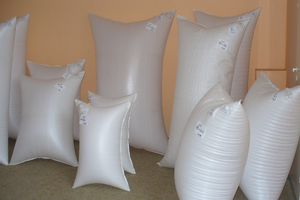
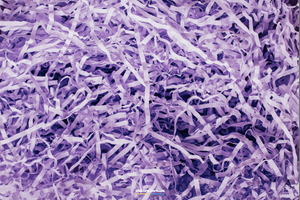
Put a layer of fill on the bottom, centre the item and fill every gap at the sides and on top. AirWave air cushions are easy to lay along the edges and add almost no weight, while crumpled kraft paper or other box fillers work well in the corners. The test is simple: close the flaps and gently shake the box. If anything moves, add more fill.
Step 6. Seal and label the box
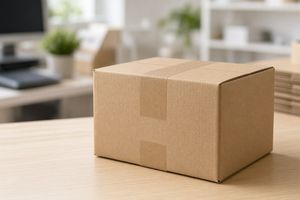
Seal the box with the H method: one strip along the centre seam and two across the side seams. For heavy frames use reinforced tape; we explain how to match the width to the weight in reinforced kraft tape by box weight. Paper water-activated kraft tape bonds into the board fibres, does not peel off in frost or in a damp depot, and also shows whether the box has been opened.
Labelling is part of the protection too. Our “Careful, glass” printed kraft tape (printed in Ukrainian) seals the seam and warns handlers at the same time. Add “This way up” arrows and indicate that the parcel should stand on its edge rather than lie flat under other boxes. When booking the shipment, always mark it as fragile and declare the real value, as this matters for any claim.
Tips for different items
Mirrors
A mirror is heavier than a painting of the same size, so corner impacts are more dangerous. Tape the glass in a grid, use double corner protectors, choose double-wall board and reinforced tape. Put a frameless mirror inside a border made of cardboard strips so its edges never touch the box walls.
Stretched canvases without glass
The main risks are denting and puncture. Cover the face with smooth paper, then with rigid board, and only then wrap it. Never put plastic film directly on the canvas, especially if the paint or varnish is fresh.
Posters and photos in glazed frames
Several small frames can go in one box, but each one must be wrapped separately, with a sheet of board between them. Never stack them glass to glass.
Setting up framed-item packing in the warehouse
If you ship paintings and mirrors regularly, give them a dedicated packing bench. Keep a roll of honeycomb paper on a dispenser, pre-cut corner blanks, board sheets in a few standard sizes and void fill within reach. That way no packer goes looking for materials with unprotected glass in hand, and every order is packed the same way.
It also helps to write a short card for each standard format (for example A4, A3 and 50×70 cm) listing the box size, the number of paper turns and how many cushions it takes. This cuts packing time and makes material use predictable. Store finished parcels upright on their edge and never stack other boxes on top of them, just as a careful carrier would.
Common mistakes
- A box that fits tightly, with no room for cushioning.
- Bubble wrap alone, without rigid board: it handles vibration but not pressure.
- Packing tape stuck directly to the frame or canvas, which leaves marks and lifts paint.
- No labelling, so the parcel ends up flat at the bottom of a stack.
- Empty box corners that let the item knock against the walls.
Warehouse checklist
- The glass is taped with masking tape or covered with protective film.
- Every frame corner has a protector.
- The item is wrapped in at least 3–5 cm of cushioning.
- A rigid sandwich of two corrugated sheets is in place.
- The box is 4–6 cm larger, voids are filled and nothing moves.
- Seams are H-taped and the box is marked “Fragile – glass” and “This way up”.
- The shipment is booked as fragile with its value declared.
If you are getting ready for peak season, also see our Black Friday packing checklist, and in winter our tips on packing parcels in cold weather.
Frequently asked questions
Can I ship a painting in film only, without a box?
It is not a good idea. Film protects against scratches and moisture, but not against pressure or puncture. At the very least, use rigid board on both sides and a box.
Which is better for a mirror: honeycomb paper or bubble wrap?
Both work as long as the layer is thick enough and backed by rigid board. Honeycomb paper suits fully paper-based packaging; bubble wrap is lighter at high volumes.
Should I remove the glass from the frame before shipping?
For most frames, no: taping the glass and packing it properly is enough. For very large or valuable works, the glass is sometimes replaced with acrylic or shipped separately in a wooden crate.
All the materials in this guide, including honeycomb and bubble paper, air cushions, boxes and kraft tape, are available from Viskom. If you are unsure what suits your sizes, contact our manager and we will help you put together a set for your range.