There are plenty of reasons to send wine by post. Someone is giving a bottle to a friend in another city, someone brought back more from a trip than fits in a suitcase, and someone simply sells wine and ships orders to customers every day. The goal is always the same: the bottle has to arrive in one piece, and the parcel must not arrive wet. Here is how to pack one or several bottles and which materials work best.
Why bottles break in transit
Glass itself is fairly strong. Bottles break when they knock against each other or against the side of the box, and when an outside impact passes through thin cardboard straight to the glass. Then there is the weight: a full bottle is heavy, and every time the parcel is dropped it presses hard on the sides and bottom. That is why protection rests on three things: each bottle is wrapped separately, the bottles do not touch, and nothing moves inside the box.
What you will need
- A sturdy box. The thicker the walls, the less of the impact reaches the contents. A thin box left over from another product is a bad idea for wine: it may not take the weight and can sag.
- Dividers. If you ship several bottles, use boxes with a separate cell for each one. This is how professional wineries ship wine, and wine shops often sell it in such boxes too.
- Wrapping for every bottle. Bubble wrap, where the air bubbles absorb shocks. Or a paper honeycomb sleeve, 35 or 45 cm long, which you simply pull over the bottle.
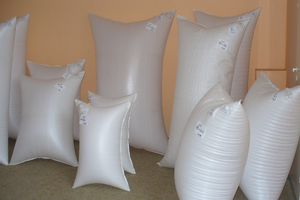
- Void fill. AirWave air cushions or paper void fill to fill the gaps around the bottles.
- Strong tape. A box of wine is heavy, and ordinary thin tape may not hold the flaps. A reliable option is water-activated kraft tape: it bonds into the cardboard and holds tight.
- Labelling. “Fragile” or “Glass – handle with care” written on the box.
How to pack one bottle
- Wrap the bottle in several layers of bubble wrap, bubbles facing in, or pull a honeycomb sleeve over it. Give the neck and the base extra protection, because they take most of the impacts.
- Secure the wrapping so it does not slip off on the way.
- Put a layer of void fill on the bottom of the box.
- Stand the bottle in the box and fill the space around it on all sides, then on top. The bottle must not touch the walls.
- Close the box and shake it gently. If anything moves or clinks inside, add more fill.
- Tape all the seams and label the box.
For a single bottle, pick a box that is not too big. The more empty space there is, the more fill you need, and the harder the bottle will be thrown around if there is not enough.
How to pack several bottles
The main rule here: the bottles must not touch each other. The easiest solution is a box with cardboard dividers for each bottle. Even then, wrap every bottle separately: the divider stops the bottles hitting one another, and the wrapping absorbs impacts from outside.
If you have no dividers, wrap each bottle more thickly and pack the space between them tightly with void fill so that each one sits in its own “nest”. Keep the weight in mind: several bottles in one box are already a serious load, so the box needs strong walls, and the bottom is best taped in a cross.
If glasses travel with the wine
A “wine + glasses” gift set needs even more care, because a glass stem breaks more easily than a bottle. Wrap the stem with plenty of material and put crumpled packing paper inside the bowl: this makes it more resistant to crushing. Pack each glass separately and do not place it right against the bottle. You will find more tips on glass in our articles “How to pack products in glass containers” and “Solutions for protecting glassware in transit”.
Labelling: “Fragile – glass”
A warning on the box does not make a parcel armoured, but it tells couriers and sorting staff to handle it more carefully. You can write it with a marker, but it is easier to seal the box with tape that already has the warning printed on it, for example 60 mm × 50 m kraft tape printed “Careful – glass” in Ukrainian. Another option is to stick several 100 × 100 mm labels marked “Fragile” on different sides of the box.
Before you ship
- Check the carrier’s rules. Not every delivery service accepts alcohol, not to every country, and the terms can change. Check them before you start packing.
- Declare the parcel as fragile. We described in detail how to pack such shipments for Nova Poshta in the guide “Nova Poshta: rules for packing fragile goods”.
- Think about the weather. In winter, parcels spend a long time in cold vans and warehouses. How to prepare a shipment for frost is covered in the article “Packing parcels in winter”.
The general scheme for any fragile product, from choosing the box to labelling, is in our step-by-step guide. For wine, just remember three things: each bottle is wrapped separately, the bottles do not touch, and nothing moves inside the box.