Thermal labels have become an integral part of modern product marking, providing a fast and efficient way to print information for many kinds of business. This innovative material makes it possible to create sharp, durable prints without ink, making marking more economical and environmentally friendly.
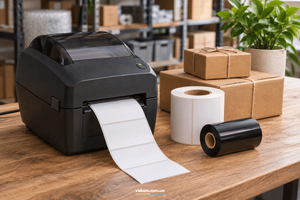
Thermal printing technology is based on a special label coating that changes colour when heated. The printer's thermal head heats certain areas of the label, creating sharp black prints. The process is fast and quiet, which makes thermal printers an ideal choice for a variety of commercial applications.
The quality of a thermal label largely depends on the composition of the heat-sensitive layer and the base material. Modern manufacturers use special components that make the image highly resistant to various external factors. A protective topcoat helps keep the print sharp for a long time.
Thermal labels have an extremely wide range of applications. In retail they are used for product labelling, printing price tags and creating barcodes. Logistics companies use thermal labels to mark parcels and track shipments. Medical facilities use them to label samples and documents.
An important advantage of thermal labels is their cost-effectiveness. Because no ink or toner is needed, operating costs are significantly lower. Thermal printers have a simple design with fewer moving parts, which reduces the risk of breakdowns and maintenance costs.
Printing speed is one of the key advantages of thermal labels. Modern thermal printers can print hundreds of labels per minute, which is especially important for businesses with high turnover. The print dries instantly, so labels can be used immediately.
Thermal labels are available in various sizes and formats, so you can choose the best option for a specific application. From small tags for jewellery to large pallet labels, the variety of formats meets the needs of different industries.
Particular attention is paid to the adhesive layer of thermal labels. Manufacturers offer different types of adhesive that stick reliably to various surfaces, from cardboard and plastic to metal and glass. Special adhesives allow labels to be used at low temperatures or in humid environments.
Storing thermal labels requires certain conditions. Optimal temperature and humidity help preserve the properties of the heat-sensitive layer and the adhesive. Protection from direct sunlight and extreme temperatures extends the shelf life of the labels.
Integration with business automation systems makes thermal labels an effective tool for managing the flow of goods. Compatibility with barcode scanners and inventory software makes it possible to build an efficient product control system.
The eco-friendliness of thermal printing is becoming an increasingly important factor. No cartridges or toners means less waste. Some manufacturers offer thermal labels made from recycled material that meet modern environmental standards.
Print quality on thermal labels depends on choosing the right thermal printer and its settings. Modern devices allow you to adjust the print temperature and label feed speed to achieve optimal image quality.
The development of thermal printing technology is opening up new possibilities. Colour thermal labels and labels with additional security features are expanding the scope of this technology. The characteristics of the heat-sensitive layer and adhesive materials are constantly being improved
Choosing the right thermal label depends on the specific conditions of use. It is important to consider how long the information must remain legible, the operating conditions and the type of surface to which the label is applied. Professional advice helps you choose the optimal option for a specific application.
In summary, thermal labels are an effective and economical solution for marking and tracking goods. Continuous improvement of technologies and materials is expanding their range of applications, making them an indispensable tool in modern business.
Read also:
- High-Quality Thermal Labels and Till Rolls for Efficient Retail
- Till Rolls: An Essential Consumable for Retail and Business
- Packaging for Industrial Goods
- Disposable Packaging: Modern Solutions for Business and Home
Related products: self-adhesive labels.