Transporting cargo is a complex process that requires precision and control at every stage. Lost goods, delays or spoilage can cause significant losses for companies. In global supply chains, where cargo travels thousands of kilometres, tracking technologies become indispensable helpers. GPS trackers and IoT devices make it possible to monitor the location and condition of products in real time, minimising risks. These solutions not only increase safety but also optimise logistics processes. This article explains how advanced systems are changing the approach to transport and giving peace of mind to senders and recipients. The focus is on the capabilities of GPS and the Internet of Things, their benefits and their impact on the industry.
GPS trackers: precision and control on the map
Global Positioning Systems (GPS) have long proved to be a reliable tool for tracking cargo. Devices installed on vehicles or directly on containers transmit location data with high accuracy. This lets logistics managers know at any moment where the cargo is, whether in a warehouse, a truck or a ship. GPS trackers work by receiving signals from satellites, which makes them usable even in remote regions. In addition to coordinates, some models provide information about speed and route, which helps detect deviations from the plan. These devices are resistant to external influences, which makes them indispensable in difficult transport conditions, for example when crossing regions with an extreme climate. Importantly, the data collected by trackers is stored in cloud systems that can be accessed via mobile apps or web platforms. This simplifies monitoring and allows a rapid response to any emergency.
Modern GPS trackers offer many functions that go beyond simply determining coordinates. Their capabilities significantly increase the safety and efficiency of transport. The main advantages of such devices include:
- Real-time tracking: location data is updated every few seconds.
- Geofences: notifications when a vehicle enters or leaves a defined area.
- Route history: movement data is stored for analysis and optimisation.
- Integration with management systems: compatibility with logistics platforms.
These functions help not only prevent theft or loss but also optimise routes and shorten delivery times. Logistics managers can receive instant alerts about any deviation, for example if a vehicle leaves its route. This approach minimises risks and increases customers' trust in the carrier.
IoT devices: a new level of monitoring
The Internet of Things (IoT) extends the capabilities of GPS by adding cargo condition monitoring. Devices equipped with sensors track parameters such as temperature, humidity, vibration or pressure. This is especially important when transporting perishable goods, pharmaceuticals or fragile items. IoT systems transmit data via mobile networks or Wi-Fi, ensuring continuous monitoring. For example, if the temperature in a refrigerated truck goes beyond acceptable limits, the system sends a notification to the responsible employee. These devices are often integrated with cloud platforms, where the data is analysed by algorithms that detect potential problems. IoT not only helps prevent product spoilage but also provides evidence that transport conditions were met, which is important for insurance claims. The compact size and energy efficiency of these devices allow them to be used even for small consignments.
Integrating IoT with other technologies opens up new horizons for logistics. Sensors working together with GPS create a comprehensive monitoring system that covers not only the location but also the physical condition of the cargo. This allows companies to respond quickly to any deviation and minimise losses. Implementing such solutions requires an initial investment, but it pays off quickly through reduced losses and greater customer trust.
Conclusion
GPS and IoT technologies have become true digital guards in logistics. They provide accurate cargo tracking and condition monitoring, minimising the risk of loss and spoilage. These solutions allow companies not only to make transport safer but also to optimise processes and cut costs. Implementing such systems strengthens customer trust and increases carriers' competitiveness. The future of logistics lies in the further development of these technologies, which will make supply chains even more transparent and reliable.
Read more on this topic: types of cargo packaging.
Read also:
- How to Stop Package Tampering: Tamper-Evident Tape and Security Mailers
- Custom Packaging: How Personalised Solutions Increase Cargo Safety
- Packaging for International Logistics: Meeting Standards and Minimising Risks
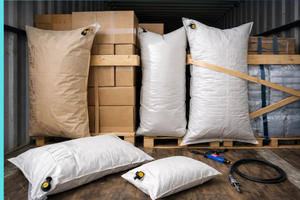
Related products: dunnage air bags.