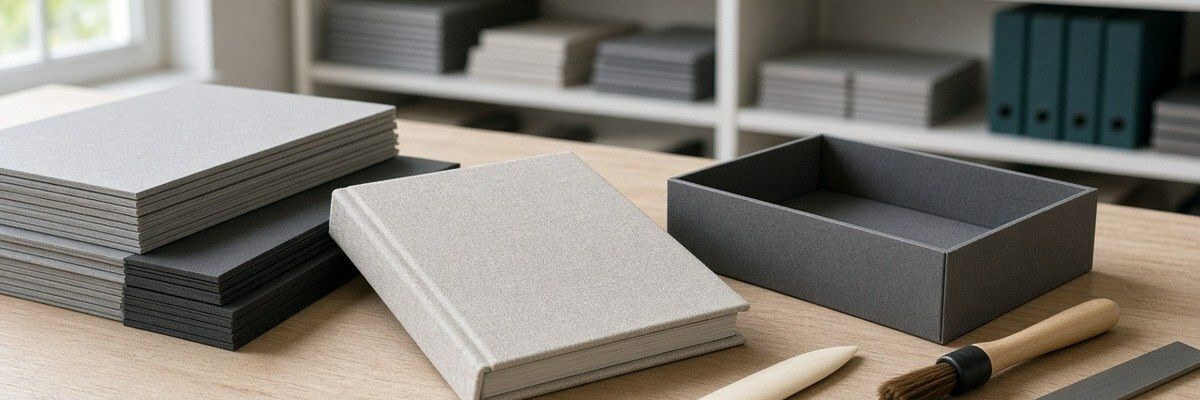
Bookbinding board is one of the most important materials in the printing industry and related sectors. Thanks to its unique properties, this strong and durable material has a wide range of applications. Let's take a closer look at the main areas where bookbinding board is used and its features in each of them.
Book publishing has traditionally been the main area of use for bookbinding board. Producing hardcovers for books requires high-quality board that gives the edition the necessary rigidity and durability. Bookbinding board is especially important for gift and collector's editions, where the quality of the material directly affects the appearance and lifespan of the book.
Archiving also makes extensive use of bookbinding board for folders, boxes and other document storage. In this field, the board's ability to protect against moisture and mechanical damage is particularly important. Archival bookbinding board should have a neutral pH to prevent chemical damage to documents during long-term storage.
Photo albums and scrapbooking are another important area of use for bookbinding board. Its strength and ability to bear considerable loads make it an ideal material for albums of various formats. The option of finishing it with different materials allows unique design solutions to be created.
The advertising industry uses bookbinding board to make presentation folders, catalogues and other promotional materials. The high-quality surface allows various types of printing and finishing, including embossing, lamination and spot varnishing. This makes it possible to produce prestigious and durable promotional products.
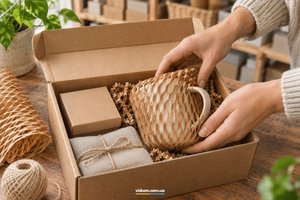
Premium packaging production also often uses bookbinding board. Its strength and presentable appearance make it an ideal material for gift boxes, jewellery cases and other exclusive packaging. The ability to create complex structures makes it possible to realise the boldest design ideas.
The education sector makes extensive use of bookbinding board for teaching materials, drawing folders, drawing boards and other study aids. Important properties in this area are resistance to frequent use and the ability to withstand considerable mechanical loads.
Museums use bookbinding board to make passe-partout mounts, protective folders for storing exhibits and presentation materials. In this field, the archival properties of the board and its ability to keep valuable items safe in long-term storage without damage are particularly important.
Stationery is also often made with bookbinding board. This includes document folders, binders, planners and other office supplies. The durability and practicality of the material make it an ideal choice for products that are used frequently.
The art world uses bookbinding board as a base for various creative projects. Artists and designers value it for the ability to create three-dimensional structures and for its reliability and durability. The board can serve as a base for collages, installations and other works of art.
Board game production also makes extensive use of bookbinding board. It is used for game boards, game boxes and various game components. Resistance to deformation and wear resistance are particularly important in this application.
In summary, bookbinding board is a versatile material used in many fields. Its unique properties, namely strength, durability, workability and aesthetic appearance, make it indispensable for producing a wide variety of products. Continuous development of technologies for producing and processing bookbinding board opens up new applications and expands the areas where this material is used.
Read also:
- Packaging for Logistics and Transport
- Cardboard Core: What It Is and Where It Is Used
- Who Uses Corrugated Board and for What Purposes
- Cardboard: Types and Properties
Related products: cardboard boxes.