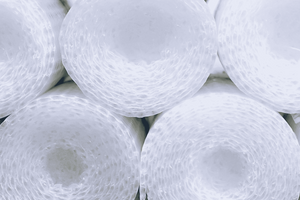
Corrugated board is one of the most popular packaging materials in the world and is widely used to make all kinds of containers and packaging. Among the wide variety of types, white and brown corrugated board attract particular attention, each with its own unique characteristics and areas of application.
The main difference between white and brown corrugated board lies in how they are produced and in the composition of the raw materials. Brown corrugated board is made from virgin pulp and recovered paper without additional bleaching, which gives it its characteristic brown colour. White corrugated board, by contrast, undergoes additional processing, including bleaching and coating of the outer layer with special compounds.
White corrugated board has a more presentable appearance, which makes it an ideal choice for premium packaging. Its surface is better suited to printing high-quality images and text, ensuring sharpness and vivid colours. This is especially important for brands that pay close attention to the visual presentation of their products.
Strength and reliability are important characteristics of both types of corrugated board. Brown corrugated board is traditionally considered stronger because its fibres are processed less during production. It withstands mechanical loads better and reliably protects products during transport and storage. That is why brown corrugated board is often used to make shipping containers and packaging for heavy loads.
Eco-friendliness is another important aspect when choosing a type of corrugated board. Brown corrugated board is considered the more environmentally friendly option, since fewer chemicals and less energy are used in its production. It is also easier to recycle, which makes it an attractive choice for companies that follow the principles of sustainable development.
Production costs also differ between the types of corrugated board. White corrugated board usually costs more because of the additional processing stages and the use of higher-quality raw materials. Brown corrugated board, on the other hand, is the more economical option, which makes it a popular choice for mass production of packaging and shipping containers.
The areas of application of white and brown corrugated board often overlap, but each type has its advantages in certain industries. White corrugated board is more often used in the food, pharmaceutical and cosmetics industries, where the aesthetic appearance of the packaging matters. Brown corrugated board is more common in the industrial sector, logistics and construction.
Moisture resistance is an important parameter for both types of corrugated board. Thanks to its additional coating, white corrugated board can offer better moisture resistance, making it suitable for use in high-humidity conditions. However, modern production technologies also make it possible to produce brown corrugated board with high moisture resistance.
Printing and design options also differ between the types of corrugated board. White corrugated board provides better print quality and wider possibilities for packaging design. Fine details and colour gradients are reproduced better on its surface. Brown corrugated board has certain limitations in terms of colour range and print quality, but this does not prevent effective design solutions from being created on it.
The shelf life of finished products can also vary depending on the type of corrugated board. White corrugated board keeps its appearance better over a long period, especially under proper storage conditions. Brown corrugated board may change its shade under the influence of sunlight, but this does not affect its protective properties.
The choice between white and brown corrugated board often depends on specific production needs and the requirements for the finished packaging. It is important to consider factors such as the purpose of the packaging, transport and storage conditions, the project budget and environmental requirements. In some cases, the optimal solution may be to combine both types of corrugated board in one product.
Innovative production technologies are constantly improving the properties of both types of corrugated board. New types of coatings are being developed, strength and moisture resistance are improving, and new printing and design options are emerging. This expands the areas of application of corrugated board and makes it an even more versatile packaging material.
In summary, both white and brown corrugated board have their own unique advantages and applications. The choice of a specific type depends on many factors, including requirements for appearance, strength, cost-effectiveness and eco-friendliness. Understanding the differences between these materials helps you make the optimal choice for a specific application and achieve the best results in packaging production.
Read also:
- Corrugated Board: a Reliable Packaging Material for Modern Business
- Cardboard or Plastic: Which Packaging Is Better?
- Who Uses Corrugated Board and for What Purposes
- Eco-Friendly Packaging: What Are Its Benefits?
Related products: cardboard boxes.