A BOPP bag is a transparent polypropylene bag that lets you see the product without opening it. In the Viskom range these bags come with an adhesive flap: you place the item inside, peel off the backing strip and close the bag without tape. Below is how they differ from polyethylene and courier bags, what they suit, and how to pick the size.
What is a BOPP bag?
BOPP stands for biaxially oriented polypropylene. The film is stretched in two directions, which is why it comes out clear, slightly glossy and does not cloud over. In Viskom bags the film is 25 µm thick: it is stronger than ordinary polyethylene, weighs almost nothing and does not absorb water.
This kind of bag is rarely the outer parcel. It is used as individual packaging, so the item sits neatly on a shelf or in an order and can be examined before the bag is opened. It does not cushion knocks or resist crushing on its own — that needs outer packaging.
What types of BOPP bags are there?
Bags are made with an adhesive flap or without one. Without a flap the bag has to be heat-sealed or taped shut, and not every BOPP film is suitable for heat sealing. The Viskom catalogue currently lists bags with an adhesive flap.
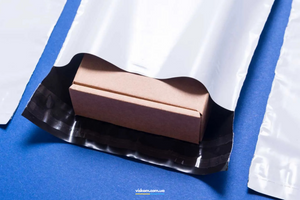
The flap is 40 mm wide. You remove the protective strip, fold the flap onto the body of the bag, and it holds without tape or staples. The adhesive will take a few openings if you need to check the contents. That is handy when you are assembling orders, but the flap is not a everyday zip and not a tamper-evident seal: it is not airtight and it is not an opening indicator.
Sizes run from 60×90 mm to 500×600 mm. Check the pack quantity on the product page: most items are packed in 100s.
What are BOPP bags used for?
A clear wall is useful wherever the product should stay visible:
- print and stationery — leaflets, invitations, stickers, bookmarks and small printed sets;
- small accessories — jewellery on a backing card, badges, buttons, pins and hair ties, provided there are no unprotected sharp edges;
- small folded textiles, if the bag fits;
- handmade items, souvenirs and kits of several small pieces.
Cosmetics go into a clear bag when you want to show a bottle or a set. For shipping that is usually not enough: you then need a courier bag or a box. There is more on packing cosmetics in “Packaging for cosmetics”, and on clothing in the step-by-step guide to packing clothes for the post.
Be more careful with food. Biscuits, sweets, bakery goods or dried fruit may be packed only if that specific bag is confirmed as suitable for contact with those foods. The name “BOPP” and the clarity of the film do not prove this on their own.
How do you choose the size?
Measure the item as it will sit in the bag, including any backing card, card insert or other inner pack. Allow for thickness as well as length and width. The film should not stretch at the seams, and you need room for the flap: the 40 mm flap itself is not added to the usable height.
Size markings on product pages can be written in different ways, so before a large order check the description of the model and do a trial pack with a few items.
A rough guide. Small formats, such as 60×90 or 80×120 mm, suit jewellery, badges and small hardware. Mid sizes, for example 200×250 or 250×350 mm, are used for print, small textiles and sets. Large ones, up to 400×600 and 500×600 mm, are for bigger contents that should still stay visible.
How is BOPP different from polyethylene, cellophane and a courier bag?
A polyethylene bag is made from a different polymer. BOPP film is usually clearer, slightly glossy and a little stiffer; polyethylene is more elastic and is more often used where stretch matters more than “display” clarity. Compare specific models — thickness, construction and purpose — not just the material name.
People sometimes call any clear bag cellophane, but BOPP is polypropylene, not a cellulose film. Viskom does not sell cellophane bags, so for a comparison look at polyethylene bags and the other formats in the Bags category.
A courier bag is already the outer packaging of a shipment: opaque polyethylene with a flap, sometimes with a document pocket. A BOPP bag shows the product; a courier bag hides it and holds it in transit. If you need both a clear presentation and a postal shipment, one often goes inside the other.
How do you pack an item in a BOPP bag?
- Make sure the size and type of bag suit this particular item.
- Cover sharp edges or add a backing so the film is not punctured.
- Place the item without stretching the film or the seams.
- Check that the adhesive area is free of dust and fluff, peel off the strip and press the flap down evenly.
- For shipping add outer packaging: a courier bag for soft goods, or a box if the item is fragile or must not bend.
Print and documents that must not be creased are best put in the bag first and then into a stiffer outer pack. There is a separate article on how to pack books and documents for shipping.
FAQ
Can BOPP bags be heat-sealed?
Not every BOPP film is meant for heat sealing. If you plan to seal the bags, check the specifications of that model. An adhesive flap does not tell you whether the film can be heat-sealed.
Can the adhesive flap be reused?
On Viskom bags the flap will take a few openings so you can check the contents. It is not designed for constant opening and closing, and once the film or adhesive is damaged the bag should no longer be used as product packaging.
Is a BOPP bag enough for posting?
Usually not: it is individual product packaging, not an outer mailer. Whether you also need a courier bag, a box or void fill depends on the contents and the carrier’s rules.
Are these bags suitable for biscuits or bakery goods?
Only if that model is confirmed as suitable for contact with food. Separately check how the product should be stored and whether the bag needs an extra barrier against moisture or fat.